UWinChem

Showing posts with label Loeb. Show all posts

Tuesday, September 12, 2017

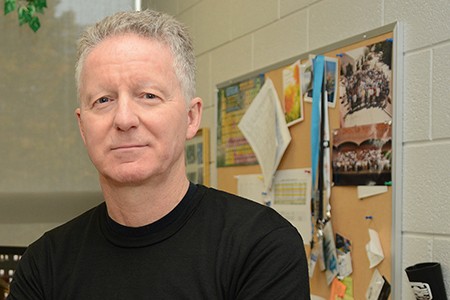
Professor Stephen Loeb named as a Fellow of the Royal Society of Canada

Congratulations to Professor Stephen Loeb, who has been named as a Fellow of the Royal Society of Canada.

Prof. Loeb is a world leader in the design of molecular machines and supramolecular chemistry. His team has developed a wide variety of methodologies for the preparation of mechanically interlocked molecules. These molecular machines can be created by synthetically interlocking molecules together which allows the molecular components to move about independently of each other.

Fellows of the Royal Scoiety are nominated by their peers for making remarkable contributions in the arts, the humanities, the sciences and in Canadian public life. They are considered to be the best in their field.

He will be inducted to the Fellowship and College of the RSC during the RSC Celebration of Excellence 2017 from November 23 to 26.


A full story on his nomination is available on the Daily News site.

Tuesday, March 29, 2016

Loeb awarded Erskine Fellowship in New Zealand


Congratulations to Steve Loeb, Professor and Canada Research Chair in the Department of Chemistry and Biochemistry, who has been awarded a prestigious Erskine Fellowship from the University of Canterbury in Christchurch, New Zealand. The Erskine Fellowship program provides international visitors with the cost of transportation to New Zealand plus local accommodation and living expenses for the visiting fellow and their spouse. 


The Fellowship requires the visiting fellow to interact with the researchers in the department and give a short series of lectures in their area of expertise to senior undergraduate and graduates students - previous Fellows in Chemistry include 2005 Nobel Laureate Robert Grubbs of Caltech.  Loeb will be visiting New Zealand for six weeks in April and May. In addition to his interactions with University of Canterbury, he will also be giving research lectures at other New Zealand universities; University of Auckland, University of Otago and Massey University.

We wish Professor Loeb success in New Zealand, and safe travels!

For more information on Professor Loeb's research, click here!

Wednesday, August 1, 2012

Chemists break new ground in molecular machine research

Nick Vukotic, left, and Kristopher Harris are two of the team members who developed and tested University of Windsor Dynamic Material, UWDM-1.


A graduate student and his team of researchers have turned the chemistry world on its ear by becoming the first ever to prove that tiny interlocked molecules can function inside solid materials, laying the important groundwork for the future creation of molecular machines.
“Until now, this has only ever been done in solution,” explained Chemistry & Biochemistry PhD student Nick Vukotic, lead author on a front page article recently published in the June issue of the journal Nature Chemistry. “We’re the first ones to put this into a solid state material.”

schematic diagram of UWDM-1
This schematic shows how the various elements assemble themselves into mechanically interlocked molecules.
The material Vukotic is referring to is UWDM-1, or University of Windsor Dynamic Material, a powdery substance that the team made which contains rotaxane molecules and binuclear copper centers.  The rotaxane molecules, which resemble a wheel around the outside of an axle, were synthesised in their lab. The group found that heating of these rotaxane molecules with a copper source resulted in the formation of a crystalline material which contained structured arrangement of the rotaxane molecules, spaced out by the binuclear copper centers.

“Basically, they self-assemble in to this arrangement,” said Vukotic, who works under the tutelage of chemistry professor Steve Loeb. Other team members include professor Rob Schurko, and post-doctoral fellows Kristopher Harris and Kelong Zhu.

Heating the material causes the wheels to rapidly rotate around the axles, while cooling the material causes the wheels to stop, he said. The entire process can’t be viewed with a microscope, so the motion was confirmed in Dr. Schurko’s lab using a process called nuclear magnetic resonance spectroscopy.

“You can actually measure the motion and you can do it unambiguously by placing an isotopic tag on the ring,” explained Dr. Harris, who helped oversee that verification process.
Although the team admits their findings are still very much a proof of principle, they insist that molecules in solid materials can be manipulated to form switches and machines. This could be extremely significant and could find future applications in the fields of computer storage, data transfer or controlling the electronic properties of materials at the molecular level.

“Important metal organic frameworks like this are typically named after the university in which they were created,” Vukotic said of the material’s name. “It also emphasizes that this material is a prototype for other dynamic materials to come.”

Since the Nature Chemistry article appeared, a number of leading chemistry publications around the world have been reporting on the team’s findings, Dr. Loeb said.

“It’s a starting point,” said Loeb, who first imagined the concept about 10 years ago. “It’s a blueprint, but it’s the first demonstration of motion in a solid state. Normally when you make a new material you’re done. You can’t reorient molecules in a solid state.”

This story originally appeared on the Daily News, and is written by Stephen Fields
http://www.uwindsor.ca/dailynews/2012-06-15/chemists-break-new-ground-in-molecular-machine-research

Saturday, February 19, 2011

Nick Vukotic wins Ludo Frevel Crystallography Scholarship from the International Centre for Diffraction Data

Congratulations to Nick Vukotic, who has been awarded the Ludo Frevel Crystallography Scholarship from the International Centre for Diffraction Data.

Nick has been involved in trying to create a three-dimensional, interlocking network of functioning molecular machines. The foundation of his work is built on X-ray diffraction, a process which involves analyzing the crystallized forms of chemical compounds by bathing them in a stream of nitrogen and hitting them with an intense X-ray beam in order to obtain a computerized visual image of their molecular structures.

“He’s become a real expert on this technique for analyzing the structure of solid state materials,” said Steve Loeb, Vukotic’s academic supervisor and a Canada Research Chair in Materials Science and Technology. “He’s very creative and he’s an exceptional student.”

Click here to read the whole story on the UWindsor Daily News.